



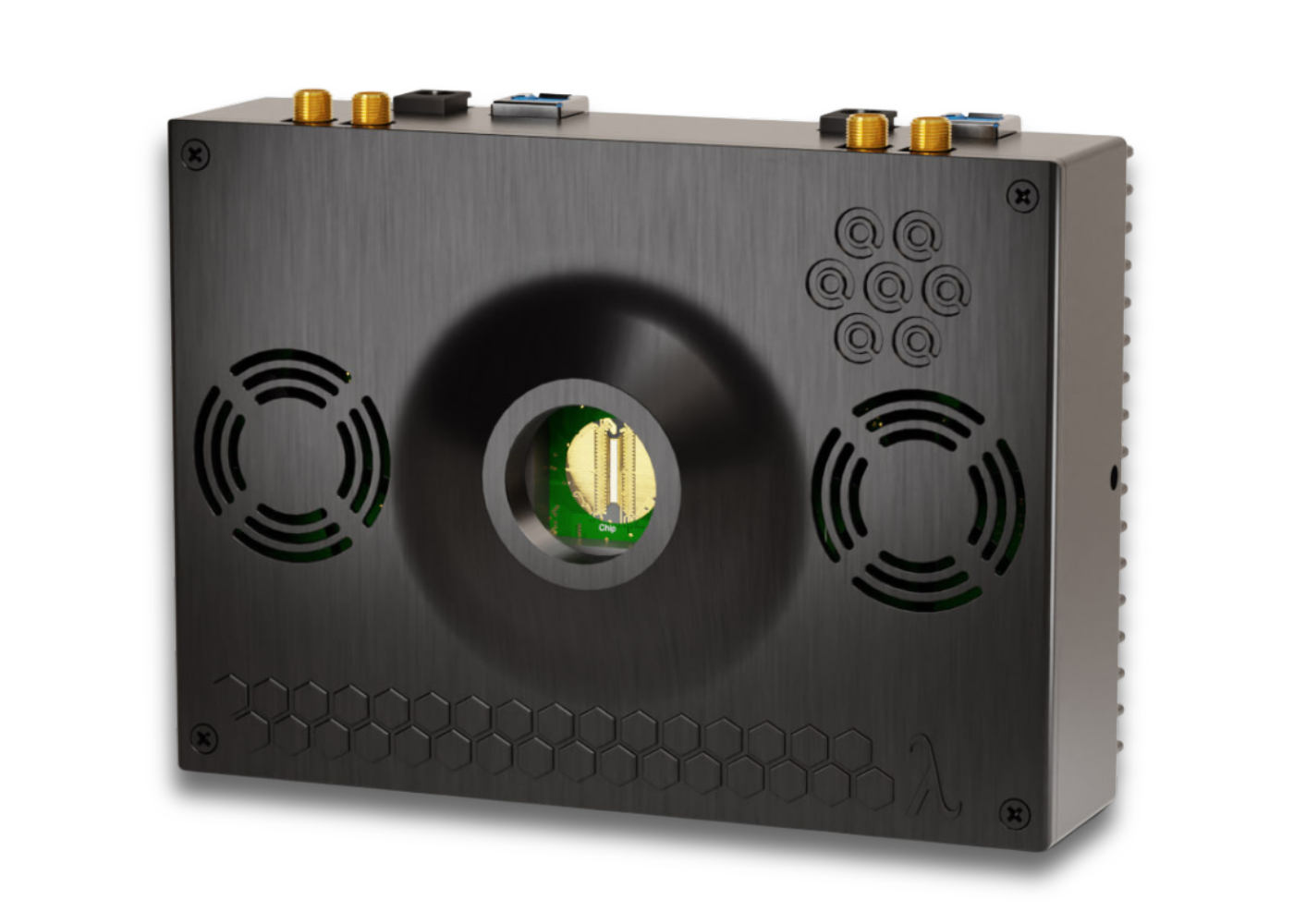


Single-Photon Avalanche Diode (SPAD) arrays deliver a powerful alternative to PMTs.
Flow cytometry is a powerful technique that unlocks the secrets of cells in motion, analyzing multiple properties with speed and precision. By labeling cells with bright fluorescent dyes, researchers can highlight structures of interest, track subtle changes, and uncover critical insights into health and disease.
Traditionally, most flow cytometers rely on photomultiplier tubes (PMTs), with up to four detectors for scattering and as many as 64 for fluorescence. While PMTs are established technology with a broad dynamic range, they come with trade-offs: bulky single-point detectors, limited sensitivity (below 45% quantum efficiency), and excess noise that reduces data clarity.
SPAD arrays change the game. With thousands of integrated pixels, they consolidate multiple fluorescence detectors into one compact array, dramatically simplifying system design, lowering costs, and boosting reliability. Even more, SPADs deliver superior sensitivity and Poisson-limited signal-to-noise performance, ensuring researchers capture the faintest signals with unmatched accuracy.
SPAD arrays are optimized for a wide detection spectrum and offer higher sensitivity than photomultiplier tubes (PMT).
The single-photon counting nature of SPADs results in lower noise levels compared to analog PMT detectors.
SPAD detectors have high pixel numbers, allowing to replace multiple PMTs with one SPAD detector.
With compact arrays, SPAD technology paves the way for next-generation cytometers with enhanced multiplexing and streamlined integration.
SPADs provide picosecond timing accuracy, opening doors for FLIM and advanced assays with richer biological information.
SPAD arrays benefit from ongoing semiconductor advances, enabling continuous performance improvements.
27-05-2025
Comparison between SPAD and EMCCD cameras in low-light conditions
22-07-2024
Target and multiplex different species with high sensitivity and specificity, providing a fast and noninvasive readout.
25-09-2024
A Concise overview of SPAD technology and its applications in diverse fields
A high-performance single-photon detector array. SPAD 93 is a detector array with 93 hexagonally packed single-photon avalanche diodes (SPADs) with best-in-class performance. Direct photon-counting and photon-time tagging to enable a wide range of single-photon detection applications.
A linear detector with a 320×1 SPAD array. This detector features both fine time gating and individual photon arrival timestamping circuitry, ideal for time-resolved spectroscopy. This spectral detector features microlens-enhanced detection performance and low dark noise.
We offer the design and development of custom or customized detectors as a service. The Pi Imaging Technology team has an accumulated experience of over 20 years in the design of SPAD-based sensors.